Learn how to make soap, hand sanitizer, lotion, serums, scrubs, bath bombs, shampoo, conditioner, and cosmetics at the Soapmaking Studio in San Diego County, CA.
Most classes may be attended either online (via Google Meet video conferencing) or in person.
Soap from Ashes is a complete lecture with detailed instructions and photographs for making soap from plant ashes. This presentation includes information on how to extract the naturally-caustic solution from any type of plant ashes (combusted hardwood, softwood, grasses, or leaves) and how to concentrate the solution for maximum effectiveness. Learn how to collect and filter rain water, how to render and prepare animal fats for soapmaking, how to test the soap for harshness, how to adjust the soap for gentleness, and how to cook the soap over a wood fire—all without using electricity, for a true pioneer experience.
Attend in person or online.
Prerequisite: None.
Classroom hours: 2 hours.
Maximum enrollment: 12 students in person and 8 students online.
Class fee: $35. Materials fee: $18.
The additional shipping fee applies only to online attendance
and covers the expense of mailing to the student a workbook before class and shipping a certificate after attendance.
Shipping fee: $22 (Shipping via US Postal Service, Post Office).
Register for Soap from Ashes.
Soapmaking 100 is a beginning-level melt and pour soapmaking class to teach students to make bars of soap embellished with personal photos. Detergent-free melt and pour soap base allows crafters to make a truly natural soap with endless sales possibilities, when topped with a personal photograph. Learn to create stunning, personalized gift soaps with images of wedding parties, newborn babies, or company logos. Students must email a photograph in JPG or GIF format that is at least 4 inches square or 300 pixels square to info@soapmakingstudio.com at least 24 hours before the start of the class. A student who fails to submit a personal photograph by the deadline may receive a generic printed image to embed in soap during the class. Each student receives a bar of soap made during the class with the student's personal, submitted photo.
Attend in person or online.
Prerequisite: None.
Classroom hours: 2½ hours.
Maximum enrollment: 10 students in person and 6 students online.
Class fee: $45. Materials fee: $21.
The additional shipping fee applies only to online attendance
and covers the expense of mailing to the student a workbook before class and shipping products and a certificate after attendance.
Shipping fee: $31 (Shipping via US Postal Service, Post Office).
Register for Soapmaking 100.
Soapmaking 101 is a beginning-level soapmaking class designed to teach students to make soap by hand at home. The main focus of this class is the "cold process" soapmaking method although the class does briefly describe "melt and pour" soap crafting. After learning soapmaking safety, students are taught to formulate soap recipes and calculate lye quantities without using a "lye calculator." The objective of this class is to have students understand saponification values and be comfortable creating their own soap recipes at home. Students make cold process soap during the class session and take home a bar. This class is also available online, Description of Online Soapmaking 101, below.
Attend in person or online (below).
Prerequisite: None.
Classroom hours: 4½ hours, includes one 15-minute break.
Maximum enrollment: 10 students in person.
Class fee: $99. Materials fee: $25.
Register for Soapmaking 101.
Online Soapmaking 101 is an online interactive video and audio feed of the live Soapmaking 101 class at the Soapmaking Studio via Google Meet. View the Description of Soapmaking 101, above. Online attendance includes access to an online workbook only during the time of the class via an email hyperlink to Google Drive. A hardcopy of the Soapmaking 101: Beginning Cold Process Soapmaking class workbook is available for purchase from Amazon Soapmaking 101: Beginning Cold Process Soapmaking (Workbook) or from our Books in stock. Because the online workbook and video/audio feed are both served via Google products, they work best with the Google Chrome Internet browser. Online students are mailed a bar of soap made during the class. Review the Online Attendance policies to get the most out of an online class.
Attend in person (above) or online.
Prerequisite: None.
Classroom hours: 4¾ hours, includes one 15-minute break.
Maximum enrollment: 6 students online.
Class fee: $124.
Register for Online Soapmaking 101.
Soapmaking 105 is an intermediate-level soapmaking class to teach students to make bars of soap using the hot process soapmaking method. The hot process soapmaking method is beneficial in achieving truer scents and using less scent material. Particular emphasis is placed on the safety of hot process soapmaking. Each student receives a bar of hot process soap made during the class.
Attend in person or online.
Prerequisite: Soapmaking 101 or 1 year of experience (at least 5 batches of soap).
Classroom hours: 2½ hours.
Maximum enrollment: 12 students in person and 8 students online.
Class fee: $52. Materials fee: $14.
The additional shipping fee applies only to online attendance
and covers the expense of mailing to the student a workbook before class and shipping products and a certificate after attendance.
Shipping fee: $31 (Shipping via US Postal Service, Post Office).
Register for Soapmaking 105.
In Soapmaking 125 class, learn to create beautiful, new bars of soap by rebatching old scraps and failed batches. Safely learn to neutralize lye-heavy soap or introduce additional lye to oily soap, in order to salvage failed batches and produce gorgeous soap. Many soapmakers don't know how to rebatch soap to create fragrant, vibrant, new bars of soap from old, forgotten, faded bars lacking color or scent. View a soap rebatching demonstration and learn to improve soap through rebatching and the addition of fresh organic juices, vitamins, and antioxidants. Each student receives a bar of hot process soap rebatched during the class. Previous completion of Soapmaking 105 (Description of Soapmaking 105 Intermediate Hot Process Soapmaking) is recommended but not required.
Attend in person or online.
Prerequisite: Soapmaking 101 or 1 year of experience (at least 5 batches of soap).
Classroom hours: 2 hours.
Maximum enrollment: 12 students in person and 8 students online.
Class fee: $42. Materials fee: $12.
The additional shipping fee applies only to online attendance
and covers the expense of mailing to the student a workbook before class and shipping products and a certificate after attendance.
Shipping fee: $31 (Shipping via US Postal Service, Post Office).
Register for Soapmaking 125.
Soapmaking 210 is an intense soapmaking class for intermediate and advanced soapmakers. The information presented in this class relates to both cold and hot process soapmaking. The main objective of this class is to teach students the information necessary to make a truly great bar of soap. Students learn the desirable soapmaking characteristics of different fatty acids and the fatty acid profiles of various natural oils. This class covers the chemistry of the saponification process, an explanation of how natural soap differs from commercial "soap," the different extraction methods used to produce oils, the likelihood of each oil to cause an allergic reaction, and a description of which factors affect the speed of trace and which factors affect the speed of saponification. Each student receives five small bars of soap: One each of coconut oil, palm oil, olive oil, castor oil, and either meadowfoam seed oil or rice bran oil, so the student will be able to understand and appreciate the qualities of each type of oil when used in soap.
Attend in person or online.
Prerequisite: Soapmaking 101 or 1 year of experience (at least 5 batches of soap).
Classroom hours: 3½ hours, includes one 15-minute break.
Maximum enrollment: 12 students in person and 8 students online.
Class fee: $69. Materials fee: $23.
The additional shipping fee applies only to online attendance
and covers the expense of mailing to the student a workbook before class and shipping products and a certificate after attendance.
Shipping fee: $31 (Shipping via US Postal Service, Post Office).
Register for Soapmaking 210.
In Soapmaking 212, students learn to make their own transparent "melt and pour" soap base from scratch! This hot-processed soap is made from whole vegetable oils and is completely natural. Melt and pour crafters learn to make their own base soap to save money. Soapmakers enjoy adding transparent soap to their soap lines as facial soap because transparent soap rinses more cleanly than opaque soap. Learn to make this valuable and versatile soap in Soapmaking 212. Students receive re-meltable transparent soap. Previous completion of Soapmaking 105 (Description of Soapmaking 105 Intermediate Hot Process Soapmaking) is recommended but not required.
Attend in person or online.
Prerequisite: Soapmaking 101 or 1 year of experience (at least 5 batches of soap).
Classroom hours: TBD.
Maximum enrollment: 12 students in person and 8 students online.
Class fee: TBD. Materials fee: TBD.
The additional shipping fee applies only to online attendance
and covers the expense of mailing to the student a workbook before class and shipping products and a certificate after attendance.
Shipping fee: $31 (Shipping via US Postal Service, Post Office).
Register for Soapmaking 212.
Soapmaking 214 is an intermediate-level hot process soapmaking class designed to teach students to safely make transparent bar soap at home. The specific focus of this class is making hard transparent bar soaps that are crystal clear and are made with the cold and hot process soapmaking methods. Students also learn how to artfully add colorants and herbs to transparent soap, as well as adding embeds of transparent soap to opaque cold process soap, to give another dimension to traditional cold process soap bars. Each student receives a small bar of handmade transparent soap to take home. Soapmaking 214 is not a "melt and pour" soapmaking class. Previous completion of Soapmaking 105 (Description of Soapmaking 105 Intermediate Hot Process Soapmaking) is recommended but not required.
Attend in person or online.
Prerequisite: Soapmaking 101 or 1 year of experience (at least 5 batches of soap).
Classroom hours: 4 hours, includes one 15-minute break.
Maximum enrollment: 12 students in person and 8 students online.
Class fee: $79. Materials fee: $26.
The additional shipping fee applies only to online attendance
and covers the expense of mailing to the student a workbook before class and shipping products and a certificate after attendance.
Shipping fee: $31 (Shipping via US Postal Service, Post Office).
Register for Soapmaking 214.
Soapmaking 215 is an intermediate-level liquid soapmaking class designed to teach students to safely make liquid soap at home. This class covers the various difficulties faced by home soapmakers who strive to make a truly clear liquid soap. Specific class topics include safety, formulating soap recipes with potassium hydroxide, the importance of preservative systems, and the different choices of soapmaking oils, fragrance materials, and colorants. Each student receives a 2-ounce bottle of handmade liquid soap. Previous completion of Soapmaking 105 (Description of Soapmaking 105 Intermediate Hot Process Soapmaking) is recommended but not required.
Attend in person or online.
Prerequisite: Soapmaking 101 or 1 year of experience (at least 5 batches of soap).
Classroom hours: 3½ hours, includes one 15-minute break.
Maximum enrollment: 12 students in person and 8 students online.
Class fee: $69. Materials fee: $23.
The additional shipping fee applies only to online attendance
and covers the expense of mailing to the student a workbook before class and shipping products and a certificate after attendance.
Shipping fee: $31 (Shipping via US Postal Service, Post Office).
Register for Soapmaking 215.
Soapmaking 216 is an intermediate-level soapmaking class to teach students to make gel soap using the hot process soapmaking method. Gel soap is thicker than liquid soap and requires different ingredients to prevent a film or skin from forming on top of gel soap. Unlike liquid soap, which must be dispensed from a foam pump, gel soap is easily dispensed from any pump bottle. Gel soap may be used as shower gel, body wash, face soap, hand soap, or bubble bath. This class includes information on a simple FDA-approved ingredient for making antibacterial gel soap. Each student receives a bottle of gel soap made during the class. Previous completion of Soapmaking 105 (Description of Soapmaking 105 Intermediate Hot Process Soapmaking) is recommended but not required.
Attend in person or online.
Prerequisite: Soapmaking 101 or 1 year of experience (at least 5 batches of soap).
Classroom hours: 3 hours, includes one 15-minute break.
Maximum enrollment: 12 students in person and 8 students online.
Class fee: $69. Materials fee: $18.
The additional shipping fee applies only to online attendance
and covers the expense of mailing to the student a workbook before class and shipping products and a certificate after attendance.
Shipping fee: $31 (Shipping via US Postal Service, Post Office).
Register for Soapmaking 216.
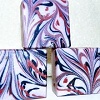
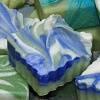
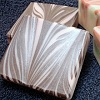
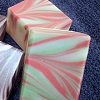
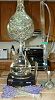
Soapmaking 220 is an intermediate to advanced soapmaking class that covers the different types of colorants and scent materials for use in making soap, their manufacture and extraction methods, their effectiveness, and the strengths at which they should be used in cold process soap, hot process soap, and melt and pour soap. Students are taught how to color and scent soap safely and effectively, how to determine if too much colorant has been used in a bar of soap, and the possible dangers of over-coloring soap. Lab includes swirling two colors into cold process soap and extracting essential oils from plants by using a steam distillation unit. Students are also taught to easily extract essential oils and hydrosols from plants through an alternative method using a large stock pot.
Attend in person or online.
Prerequisite: Soapmaking 101 or 1 year of experience (at least 5 batches of soap).
Classroom hours: 4 hours, includes one 15-minute break.
Maximum enrollment: 12 students in person and 8 students online.
Class fee: $79. Materials fee: $26.
The additional shipping fee applies only to online attendance
and covers the expense of mailing to the student a workbook before class and shipping products and a certificate after attendance.
Shipping fee: $31 (Shipping via US Postal Service, Post Office).
Register for Soapmaking 220.
Soapmaking 221 presents students with information on how to create pleasing scents from essential oil blends. Because most soapmakers find it challenging to create a lasting scent from essential oils, the main focus of this class is learning to make scents last longer in soap. (Hint: Most suggestions on the Internet, such as adding bentonite clay, are ineffective.) Essential oil blends can have tremendous longevity in soap. When properly blended, essential oils can be more tenacious than fragrance oils. Learn the secrets of essential oil staying power in Soapmaking 221. Some essential oils are not safe for skin contact, some are only safe for skin contact when used below a certain concentration, and some essential oils are known to contain carcinogenic components. In this class, learn to safely use essential oils by following IFRA guidelines to comply with FDA regulations. Previous completion of Soapmaking 220 (Description of Soapmaking 220 Coloring and Scenting Soap) and Aromatherapy Natural Perfume Class (Description of Aromatherapy Natural Perfume Class Make Natural Perfumes from Essential Oils) are recommended but not required.
Attend in person or online.
Prerequisite: None.
Classroom hours: 3 hours, includes one 15-minute break.
Maximum enrollment: 12 students in person and 8 students online.
Class fee: $64. Materials fee: $16.
The additional shipping fee applies only to online attendance
and covers the expense of mailing to the student a workbook before class and shipping a certificate after attendance.
Shipping fee: $22 (Shipping via US Postal Service, Post Office).
Register for Soapmaking 221.
Soap Garden 224 is a gardening and ingredient preparation class. Students learn techniques for growing their own herbs and plants to use as soap ingredients. Then they learn how to dry, crush, and grind the dried herbs and how much of each dried plant to add to the soap for color and texture. Classroom lecture includes a list of toxic plants that should not be used in soapmaking. Subject matter includes green gardening practices to save water while sustaining a suitable wildlife habitat. The information presented also includes plants recommended by the California Department of Forestry for being fire resistant and native southern California plants used in soapmaking.
Attend in person or online.
Prerequisite: None.
Classroom hours: 2½ hours.
Maximum enrollment: 12 students in person and 8 students online.
Class fee: $49. Materials fee: $16.
The additional shipping fee applies only to online attendance
and covers the expense of mailing to the student a workbook before class and shipping a certificate after attendance.
Shipping fee: $22 (Shipping via US Postal Service, Post Office).
Register for Soap Garden 224.
Soapmaking 225 explains the dangers and secret techniques of substituting other fluids for the water portion of cold and hot process soapmaking. Students learn how to safely replace water with beer, yogurt, fresh milk, fresh juices, puréed fruits or vegetables, herbal infusions, and hydrosols. The class includes a live demonstration of soap cupcakes made with seasonal fruits instead of water and topped with piped soap frosting made with milk instead of water.
Attend in person or online.
Prerequisite: Soapmaking 101 or 1 year of experience (at least 5 batches of soap).
Classroom hours: 2½ hours.
Maximum enrollment: 12 students in person and 8 students online.
Class fee: $58. Materials fee: $16.
The additional shipping fee applies only to online attendance
and covers the expense of mailing to the student a workbook before class and shipping products and a certificate after attendance.
Shipping fee: $31 (Shipping via US Postal Service, Post Office).
Register for Soapmaking 225.
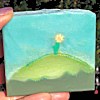
Soapmaking 228 is an advanced soapmaking class for students to learn to make artistic landscape soap by creating a soap scene with soap dough and a soap scraper. These gorgeous scenes run through the entire loaf of soap, show on both the front and back of each bar, and last for the entire use of the bar. Learn to make a modern and beautiful handmade soap scene without a 3D printer. Also, learn to make a homemade soap scraper and soap dough to model by hand or use in an extruder to form embed soap. These are two essential advanced techniques that can be used in everyday soaps or in over-the-top extreme soapmaking to create artisan soaps. Previous completion of Soapmaking 220 (Description of Soapmaking 220 Coloring and Scenting Soap) is recommended but not required.
Attend in person or online.
Prerequisite: Soapmaking 101 or 1 year of experience (at least 5 batches of soap).
Classroom hours: 2½ hours.
Maximum enrollment: 12 students in person and 8 students online.
Class fee: $68. Materials fee: $14.
The additional shipping fee applies only to online attendance
and covers the expense of mailing to the student a workbook before class and shipping products and a certificate after attendance.
Shipping fee: $31 (Shipping via US Postal Service, Post Office).
Register for Soapmaking 228.
Soap Business 320 is a beginning business class for anyone interested in forming a new business. This class focuses on the applications, fees, licenses, and permits required to form a legal business entity. Students also learn how to determine costs, set prices for handmade products, and determine profit. Discussion includes suggestions for staying motivated, creative, and competitive within the handmade products industry.
Attend in person or online.
Prerequisite: None.
Classroom hours: 4 hours, includes one 15-minute break.
Maximum enrollment: 12 students in person and 8 students online.
Class fee: $79. Materials fee: $26.
The additional shipping fee applies only to online attendance
and covers the expense of mailing to the student a workbook before class and shipping a certificate after attendance.
Shipping fee: $22 (Shipping via US Postal Service, Post Office).
Register for Soap Business 320.
Soap Business 325 is a branding business course for students who sell their handcrafted goods. Learn to add the finishing touches to complete your product image and elevate your overall company image. Help customers identify your products and your company by creating a unique and consistent persona across all media. Solid branding enhances consumer trust, increase sales, and improves customer loyalty. Whether you sell soap, cosmetics, candles, jewelry, pottery, or any other handmade item, Soap Business 325 class will help you improve your brand. Students are encouraged to bring product packaging and printed items (such as business cards or company paperwork) for discussion and critique during the class.
Attend in person or online.
Prerequisite: None.
Classroom hours: 2 hours.
Maximum enrollment: 12 students in person and 8 students online.
Class fee: $54. Materials fee: $14.
The additional shipping fee applies only to online attendance
and covers the expense of mailing to the student a workbook before class and shipping a certificate after attendance.
Shipping fee: $22 (Shipping via US Postal Service, Post Office).
Register for Soap Business 325.
Soap Business 330 is an intermediate business class that covers the new federal (including FDA and MoCRA), state, and local regulations for labeling soap. Students learn to distinguish soap from cosmetics or drugs and their appropriate labeling laws. This class also presents several inexpensive and effective marketing tips to promote the sale of handmade soap. Students are encouraged to bring a sample soap label for discussion and critique during the class.
Attend in person or online.
Prerequisite: None.
Classroom hours: 4 hours, includes one 15-minute break.
Maximum enrollment: 12 students in person and 8 students online.
Class fee: $79. Materials fee: $26.
The additional shipping fee applies only to online attendance
and covers the expense of mailing to the student a workbook before class and shipping a certificate after attendance.
Shipping fee: $22 (Shipping via US Postal Service, Post Office).
Register for Soap Business 330.
Soap Business 335 is a soap wrapping class, in which students learn how to apply shrink-wrap film to soap quickly and effectively so little or no film is wasted. This class covers the benefits of wrapping soap, which include protecting the soap from damage and preserving a sanitary bar of soap. Students learn which types of shrink film are biodegradable, which films allow scent to come through, which films are best for different types of soap (cold/hot process versus "melt and pour"), and which films are best for packaging bottles of liquid soap, lotion, or other cosmetics. Many different types of shrink machines and films are discussed in class. Students are encouraged to bring a minimum of 5 bars of their own soap to shrink-wrap in the class.
Attend in person or online.
Prerequisite: None.
Classroom hours: 2 hours.
Maximum enrollment: 10 students in person and 6 students online.
Class fee: $40. Materials fee: $14.
The additional shipping fee applies only to online attendance
and covers the expense of mailing to the student a instructional handouts before class and a certificate after attendance.
Shipping fee: $22 (Shipping via US Postal Service, Post Office).
Register for Soap Business 335.
Soap Business 340 presents students with information necessary to successfully ship soap domestically and internationally. Students learn how to package soap to prevent dents and damage, how to use biodegradable shipping materials and other sustainable packaging options, how to meet United States Customs requirements for shipping commodities internationally, the fastest shipping methods, and how to get discounted shipping rates, including discounts on US postage. Also, learn to ensure successful deliveries by verifying recipient addresses in the United States, Canada, Great Britain, and Australia. Students are invited to bring recipient address information and finished labeled bars of soap that are ready to be shipped, in order to correctly pack and secure the soap for shipping during the class. During the class, if time permits, students may purchase a shipping label and schedule a carrier pickup.
Attend in person or online.
Prerequisite: None.
Classroom hours: 2 hours.
Maximum enrollment: 10 students in person and 6 students online.
Class fee: $40. Materials fee: $14.
Register for Soap Business 340.
Soap Business 350 is designed for both students who currently have confusing or low-performing websites and for students who do not have websites. In this understandable and thorough class, learn about domain names and hosting packages. Also, learn to create your own website for free, optimize keywords, rank high on search engines, and verify your site code is valid. Finally, setup PayPal payment buttons and start selling on the Internet. Previous completion of Soap Business 320 (Description of Soap Business 320 Forming a Legal Business Entity to Sell Soap) is recommended but not required.
Attend in person or online.
Prerequisite: None.
Classroom hours: 3½ hours, includes one 15-minute break.
Maximum enrollment: 12 students in person and 8 students online.
Class fee: $70. Materials fee: $21.
The additional shipping fee applies only to online attendance
and covers the expense of mailing to the student a instructional handouts before class and a certificate after attendance.
Shipping fee: $22 (Shipping via US Postal Service, Post Office).
Soap Business 360 is a peer review class for students who have a new product ready to launch. Offering a new product for sale can be stressful; this class is designed to build student confidence and successful sales. During this semi-private session, students present finished products for review and discussion. The instructor and fellow students focus on the positive aspects of the products, suggest improvements to increase sales, assess the packaging to ensure it meets legal requirements, analyze the sale price to maximize both crafter profit and shopper value, and examine the online sales venue for an agreeable shopping experience. To participate in the roundtable, a student must bring a finished product, complete with packaging and labeling. If an online sales venue (such as a website, a social media store, or an eBay or Etsy store) is ready for review, then the website or online store may also be reviewed during the roundtable. Soap Business 360 is scheduled before or after other classes. Previous completion of Soap Business 330 (Description of Soap Business 330 Soap Labeling and Marketing) is recommended but not required.
Attend in person or online.
Prerequisite: None.
Classroom hours: 1½ hours.
Maximum enrollment: 6 students in person and 4 students online.
Class fee: $35. Materials fee: $8.
The additional shipping fee applies only to online attendance
and covers the expense of mailing to the student a instructional handouts before class and a certificate after attendance.
Shipping fee: $22 (Shipping via US Postal Service, Post Office).
Register for Soap Business 360.
In Aromatherapy Natural Perfume Class, learn the basics of aromatherapy and natural perfumery. Unveil the secrets of blending essential oils by using scent categories and fragrance notes. Design custom fragrances from essential oils aromatherapeutically created to inspire specific emotions and memory triggers. Learn the different techniques for blending perfumes in a bases of natural grain alcohol, in a base of jojoba oil, and in a base of cyclomethicone. Create your own natural perfumes in the class and take them home.
Attend in person or online.
Prerequisite: None.
Classroom hours: 4 hours, includes one 15-minute break.
Maximum enrollment: 10 students in person and 6 students online.
Class fee: $59. Materials fee: $45.
The additional shipping fee applies only to online attendance
and covers the expense of mailing to the student a workbook before class and shipping products and a certificate after attendance.
Shipping fee: $31 (Shipping via US Postal Service, Post Office).
Register for Aromatherapy Natural Perfume Class.
In Bath Bomb Class learn how to create active treats for the tub. Students learn the secrets of making exceptional bath bombs, bath fizzy tablets, and bath salts. While most easy recipes include the simple process of creating bath fizzies using fats as a sealer to prevent reaction to air, this Bath Bomb Class includes the advanced techniques necessary to create bath fizzies without oils, so they won't leave a dangerously greasy bathtub the way oils do. In order to formulate and make no fail bath bombs, this new course includes an explanation of the chemistry of the fizzing reaction occurring between the starting reactants and the chemistry of the products yielded from the reaction and how they benefit bath water and skin. The class includes a brief exposé on clean water-soluble colorants versus water-dispersible colorants that may leave an undesirably gritty coating inside the bathtub. Also, learn to make greywater-safe bath bombs without oil or sodium-based salts, which can kill plants when introduced into greywater systems. Students take home bath treats made in class.
Attend in person or online.
Prerequisite: None.
Classroom hours: 4 hours, includes one 15-minute break.
Maximum enrollment: 12 students in person and 8 students online.
Class fee: $79. Materials fee: $26.
The additional shipping fee applies only to online attendance
and covers the expense of mailing to the student a workbook before class and shipping products and a certificate after attendance.
Shipping fee: $31 (Shipping via US Postal Service, Post Office).
Register for Bath Bomb Class.
Lip Balm Making Class focuses on simple lip balm making procedures for consistent and effective lip products, including lip tubes and balms in pot style jars. Techniques include how to create a twist tube of lip balm without problematic "sinkholes." Lecture information includes vegan alternatives to bees wax, natural ingredients to make a shiny lip gloss, and oil phase vitamins and nutrients for lips and skin. Material relates to other tube products, such as solid lotion sticks for softening stretch marks, elbows, and heels and solid menthol rub sticks.
Attend in person or online.
Prerequisite: None.
Classroom hours: 3 hours, includes one 15-minute break.
Maximum enrollment: 12 students in person and 8 students online.
Class fee: $58. Materials fee: $21.
The additional shipping fee applies only to online attendance
and covers the expense of mailing to the student a workbook before class and shipping products and a certificate after attendance.
Shipping fee: $31 (Shipping via US Postal Service, Post Office).
Register for Lip Balm Making Class.
In this beginning-through-advanced Lotion Making Science class, take a scientific, hands-on approach to learning different methods and techniques for making lotion. Students learn to make small, test batches of lotion and how to increase the recipe to make larger batches. Gain confidence by learning how a batch of lotion that has separated or gone wrong can always be salvaged. Understand the importance of emulsifiers and emulsification systems: what they are and how they work. Perform scientific test experiments to prove whether or not common lotion ingredients (such as lecithin, polysorbate, and stearic acid) act as emulsifiers. In this Lotion Making Science class, students compare four (4) different emulsifiers in performance challenges to determine which emulsifiers cause soaping (white streaks during application), which emulsifiers are better for the face (non-comedogenic), which emulsifiers are water miscible (and better for use in hair conditioner), and which emulsifiers are considered natural ingredients (and widely accepted by modern consumers). This class also briefly covers labeling requirements, preservatives, and professional lab testing. Students make lotion in class and receive four (4) different lotions to take home.
Attend in person or online.
Prerequisite: None.
Classroom hours: 4 hours, includes one 15-minute break.
Maximum enrollment: 12 students in person and 8 students online.
Class fee: $85. Materials fee: $27.
The additional shipping fee applies only to online attendance
and covers the expense of mailing to the student a workbook before class and shipping products and a certificate after attendance.
Shipping fee: $31 (Shipping via US Postal Service, Post Office).
Register for Lotion Making Science.
Learn how to formulate effective spa-quality facial treatment masks. In this Mask Making Class, learn the importance of natural chemical exfoliators. Understand how alpha and beta hydroxy acids naturally exfoliate skin without scratching and learn why exfoliation is essential for minimizing wrinkles and pigmentation. The lecture includes a complete review of the function of healthy skin and what to expect from masks containing clays or fruit acids. Also learn how to preserve, package, and label mask products for resale. During the lab portion of the class, students make 3 different masks to take home, including 1 sheet mask and 2 of either clay and spirulina, puréed pumpkin and natural fruit acids, or collagen peptides with niacinamide.
Attend in person or online.
Prerequisite: None.
Classroom hours: 4½ hours, includes one 15-minute break.
Maximum enrollment: 12 students in person and 8 students online.
Class fee: $79. Materials fee: $38.
The additional shipping fee applies only to online attendance
and covers the expense of mailing to the student a workbook before class and shipping products and a certificate after attendance.
Shipping fee: $31 (Shipping via US Postal Service, Post Office).
Register for Mask Making Class.
Learn how to formulate effective spa-quality scrubs. In this Scrub Making Class, understand the difference between salt scrubs and sugar scrubs and when one is preferred over the other for easily achieving safe and natural skin exfoliation. Learn how to add beneficial vitamins and learn why preservatives should be used in oil based products. For those opposed to oil based products, learn how to create oil-free scrubs. Students take home three types of scrubs.
Attend in person or online.
Prerequisite: None.
Classroom hours: 4 hours, includes one 15-minute break.
Maximum enrollment: 12 students in person and 8 students online.
Class fee: $79. Materials fee: $26.
The additional shipping fee applies only to online attendance
and covers the expense of mailing to the student a workbook before class and shipping products and a certificate after attendance.
Shipping fee: $31 (Shipping via US Postal Service, Post Office).
Register for Scrub Making Class.
Learn to make oil-free, concentrated facial serums containing vitamins and active ingredients. In Serum Making Class, learn about the different vitamins and active ingredients used to improve skin texture, minimize wrinkle lines, improve elasticity, treat acne, and even skin tone. Learn to use the Skin Deep online cosmetic database as a reference to determine public perception of the general safety of new ingredients. During the class, learn to make natural hand sanitizer gel and gel mascara with the same beneficial base ingredients. Students take home two facial serums and either gel eye shadow or mascara made in class.
Attend in person or online.
Prerequisite: None.
Classroom hours: 4½ hours, includes one 15-minute break.
Maximum enrollment: 12 students in person and 8 students online.
Class fee: $79. Materials fee: $38.
The additional shipping fee applies only to online attendance
and covers the expense of mailing to the student a workbook before class and shipping products and a certificate after attendance.
Shipping fee: $31 (Shipping via US Postal Service, Post Office).
Register for Serum Making Class.
Shampoo soap bars and synthetic detergent shampoos have different effects on hair. In Shampoo Bars and Conditioner Bars Class, learn which ingredients are commonly added to cold process soap to make shampoo bars. Understand the chemical and physical effects of natural and synthetic shampoos, how the effects vary by ethnic hair structure, and the added benefits of using a conditioner. This presentation focuses on hard scientific facts, not subjective perspectives or opinions. After the scientific comparison lecture, watch as both a shampoo bar recipe and a conditioner bar recipe are formulated and made. Students take home handouts with the recipe, a shampoo bar, and a conditioner bar.
Attend in person or online.
Prerequisite: None.
Classroom hours: 3½ hours, includes one 15-minute break.
Maximum enrollment: 12 students in person and 8 students online.
Class fee: $74. Materials fee: $27.
The additional shipping fee applies only to online attendance
and covers the expense of mailing to the student a workbook before class and shipping products and a certificate after attendance.
Shipping fee: $31 (Shipping via US Postal Service, Post Office).
Register for Shampoo Bars and Conditioner Bars Class.
Consultations are available at the Soapmaking Studio, over the phone, or online via Google Meet. Your Private Consultation with Master Soapmaker Kerri Mixon is confidential and subject to non-disclosure. Consultation topics may include soap or cosmetics formulation, handcrafting, manufacturing, labeling regulations, business strategies, branding, or any related topic. Clients desiring more than a single hour may book consecutive hours, if available. Consultations for businesses are a tax-deductible business expense. A student in the Handcrafted Soap and Cosmetics Business program will benefit from receiving credit for attending a class through a private consultation because the consultation will be counted as a completed class.
Attend in person or online.
Prerequisite: None.
Consultation hours: 1 hour, up to 4 hours.
Consultation fee: $95 per hour or part, plus materials if required.
Register for a Private Consultation.
View the schedule or view store hours.
Classes are held at a private home occupied by a pet cat. If you are allergic to cats, please contact info@soapmakingstudio.com prior to enrolling in a class.